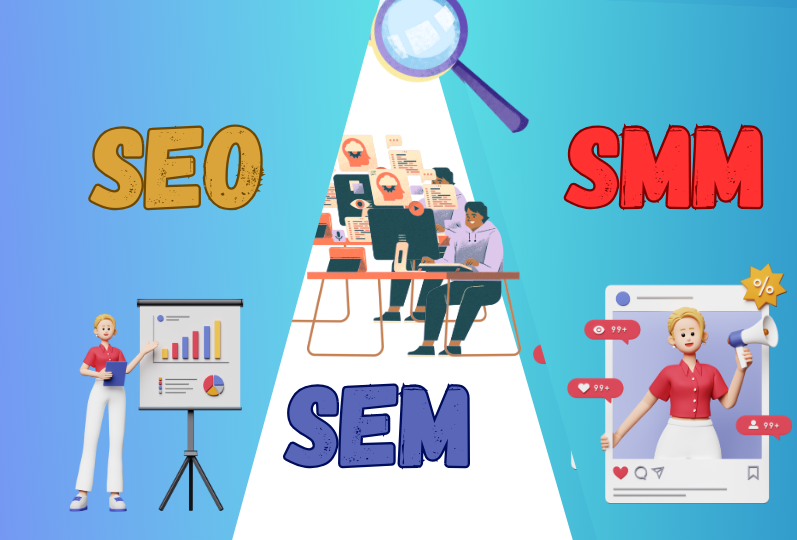
In the world of digital marketing, acronyms like SEO, SEM, and SMM are often used. What does it all mean? Understanding SEO, SEM, and SMM is important for building your online presence. Let’s go to understand the differences and benefits of SEM, SEO, and SMM
What is SEO (Search Engine Optimization)?
SEO is an organic process to improve your website’s visibility on search engines like Google. It is both an art and a science that enables you to optimize your website chances of ranking higher on Search Engine Results Pages (SERPs).
Benefits –
Free and consistent traffic – You get traffic from Google without paying any money.
Builds Trust and Credibility – Top rankings make people trust your brand more.
Better User Experience – SEO makes the site fast and easy, which people like.
What is SEM (search Engine Marketing) ?
SEM means running paid ads on Google or other search engines so that people search for something and your website appears higher.
Benefits –
Instant Visibility on Google– Paid ads instantly make your website appear at the top of Google search results.
Highly Targeted Audience – Showing the product only to those people who are interested in your product and service.
Measurable Results – You can easily track each ad’s performance from the Google Ads dashboard.
What is SMM (Social Media Marketing) ?
SMM means promoting your business on social media platforms like Facebook, Instagram, and Twitter. You communicate your message through posts, videos, and paid ads. This helps people recognize your brand and generate more customers.
Benefits –
Increases Brand Awareness – Marketing to promote the brand to the public so that it is recognized.
Cost-Effective Marketing – Make your product or service known to more people for less money .
Boosts Website Traffic – Social media increases the number of visitors to your website.
Differences Between SEO, SEM, and SMM
Aspects
Meaning
sEO
Getting your website rank in organic search results.
Medium – term (depends on engagement and campaign results)
Long- term (weeks/months)
Targeting
Keywords based on users search intent
Keywords + demographics
Interests, demographics, behaviour on social platforms
Goal
Increase organic wevbsite traffic and imrove ranking
Get quiclk traffic and leads via paid ads
Build brand awareness, engagement, and loyalty
Examples
Blog optimization, backlinks, meta tags, site speed
Google Ads, Bing Ads
Facebook Ads, Instagram posts, twitter
If you’re starting digital marketing for your business, it’s important to understand and balance these three. SEO provides sustainable growth, SEM provides fast results, and SMM provides a strong brand presence.